


[ Readable where other tags give up. Even on metal. ]
Smavoo On-Metal RFID Tag
The SMAVOO On-Metal UHF RFID Tag identifies your assets reliably, even directly on metal where ordinary tags fail. Compact, IP68-rugged, and with over 5 meters of read range, it makes every container, tool, and part uniquely identifiable.
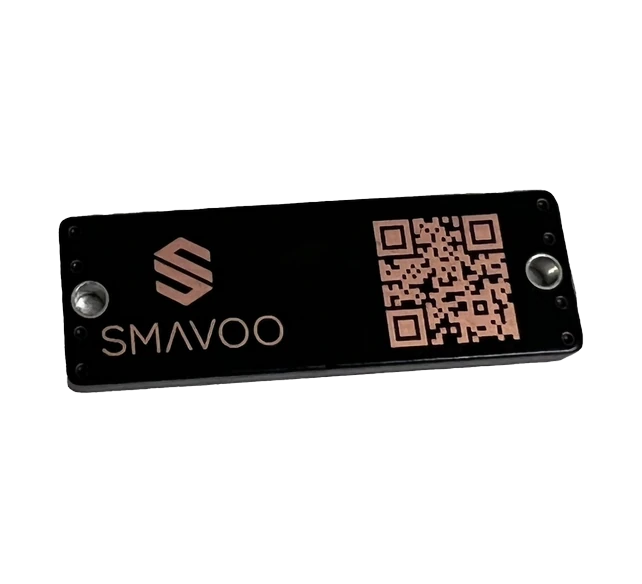


About our On-Metal RFID Tag
The SMAVOO On-Metal UHF RFID Tag is a compact, industrial-grade identification tag engineered for reliable performance on metal surfaces.
Its slim FR4 design delivers stable read ranges of up to 5 meters while maintaining high accuracy. The robust IP68 housing withstands demanding environments, and flexible mounting options let it integrate seamlessly into asset tracking, warehouse logistics, and equipment management. High-quality chip options ensure secure data retention and reliable identification for years.
Read the in-depth article: RFID-Inventur in metallreichen Fertigungshallen
Endless Possibilities:
- Goods Receipt
- Warehouse
- Indoor Transport
- Production
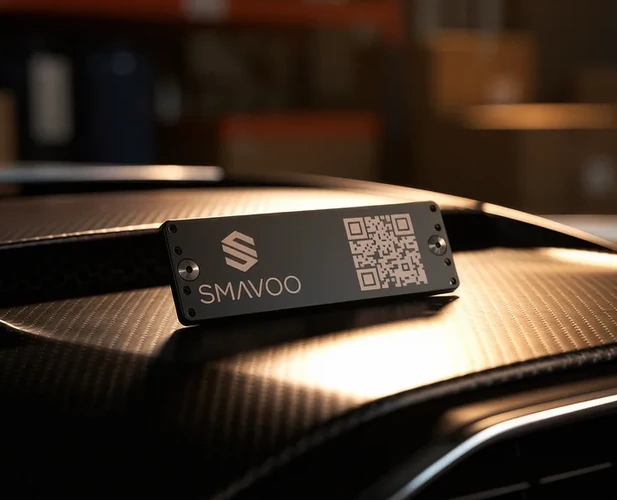
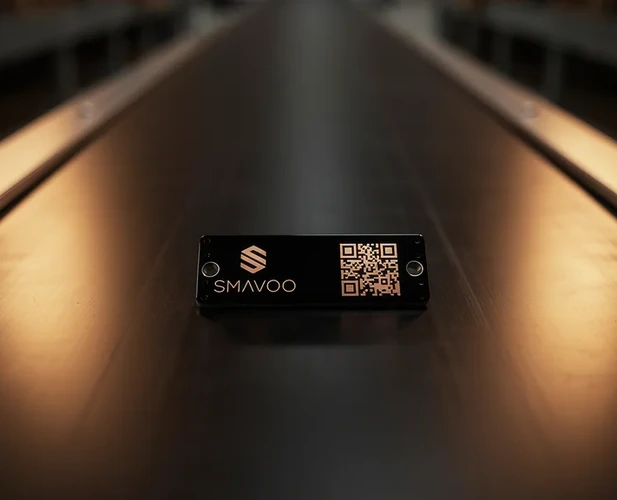
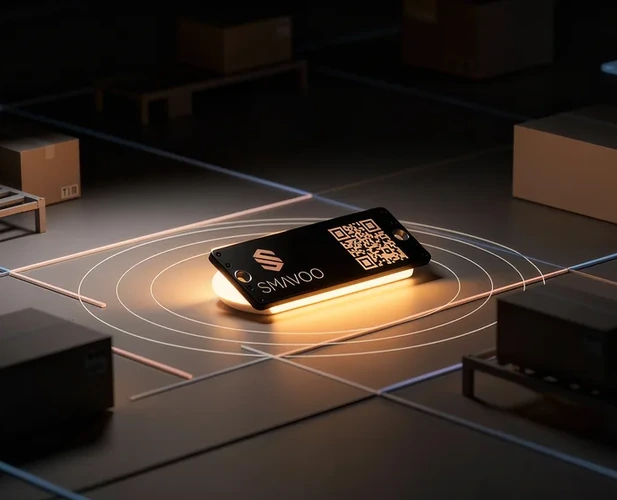

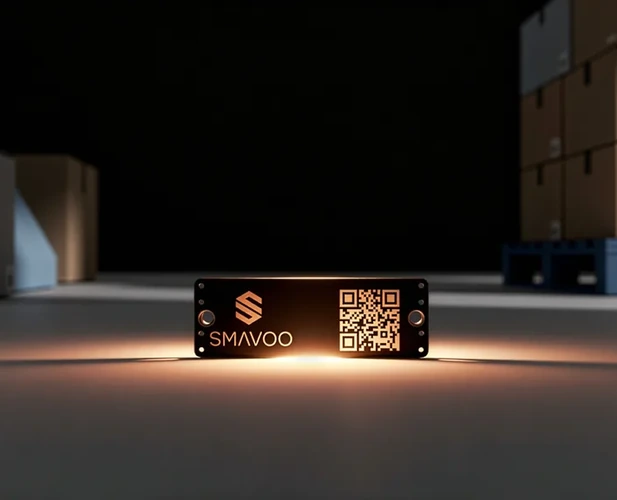

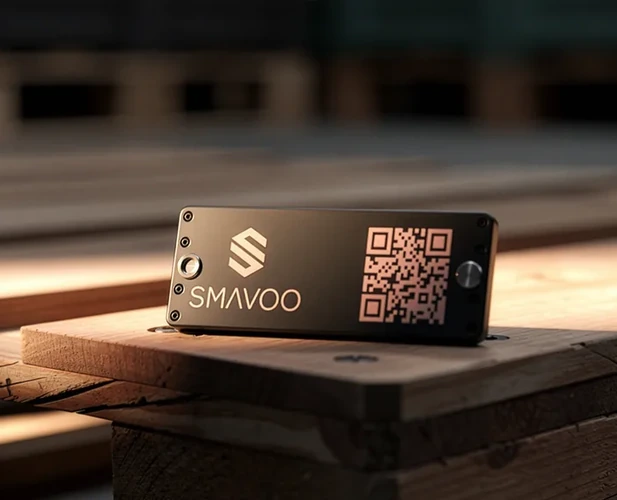

Reliable identification, even where metal gets in the way.
Built for asset tracking, warehouse logistics, and equipment management, the On-Metal RFID Tag delivers stable reads directly on metal surfaces. It is tough enough for everyday industrial use and works with your existing UHF infrastructure.


Ready to experience the power of smart logistics?
Technical Specifications

Why Metal Breaks RFID (and How We Fix It)
Ordinary UHF tags detune on metal: the signal reflects and cancels, and the tag goes silent. The on-metal design isolates the antenna from the surface, readable at 5+ m where standard tags give up.

No Line of Sight, No Wear
Unlike a barcode, the tag needs no line of sight, doesn't smudge, and doesn't tear. It reads in bulk, hundreds at once, with no individual aiming.

Writable, Not Just Readable
With 512-bit USER memory, the tag carries data right on the asset: status, batch, or maintenance info stays available even with no database connection.

Part of the SMAVOO RFID System
Read by the SMAVOO 4-Port Reader (fixed at the gate) and Mobile Scanner (mobile in the warehouse). Tag, gate, and handheld from one source, cleanly matched.
One Product,
Multiple Use-Cases

Returnable Carriers from the First Delivery
Mesh boxes, metal pallets, and steel containers often arrive already tagged. The On-Metal Tag sits directly on the metal and is captured in bulk at the gate, with no scraping off old labels and no single scans. Every returnable is in the system from second one.


Tools and Equipment That Stay Accounted For
Hand tools, fixtures, gauges, and mobile devices carry the tag right on the metal body. At inventory time a handheld reads whole tool walls in seconds and confirms what's present, so anything missing surfaces at the next count instead of going unnoticed. It tells you what's on hand and where it was last read, not a live position on a map.

Reading the Returnable Loop at Every Gate
As carriers move through the hall, they're read at gates and zone readers, from goods-in to the line. You don't get a dot on a map, you get clean movement events: which zone a carrier was last read in, whether it has entered or left an area, how many are in circulation and which are overdue. Less shrinkage, higher utilization of the returnable fleet.

Parts and Tooling Through Every Station
It isn't only tools and molds. Metal and even carbon-fibre parts, which detune ordinary tags just like metal, carry the tag through the line and are read at each station. That gives quality assurance a phase-by-phase history: which station a part passed, how long it dwelled there, and how fast it moved through, the basis for real cycle-time analysis. The same reads keep molds, fixtures, and welding jigs accounted for, including their cycle count and next service.

frequently asked questions
Why don't standard RFID tags work on metal, but the On-Metal Tag does?
Ordinary UHF RFID tags detune on metal: the surface reflects the radio signal, partly cancels it, and shifts the antenna frequency, so the tag becomes unreadable. The SMAVOO On-Metal UHF RFID Tag solves this with an FR4 substrate that isolates the antenna from the metal surface and tunes it specifically for on-metal use. As a result it reaches stable read ranges of over 5 meters with a fixed reader and over 3 meters with a handheld, even mounted directly on a steel surface, a mesh box, or a machine housing. In practice that means you can uniquely tag exactly the assets where standard labels used to fail, like tools, containers, and equipment, with no spacer or extra bracket.
What read range can a UHF RFID tag reach directly on metal?
The SMAVOO On-Metal UHF RFID Tag reaches over 5 meters of read range with a fixed reader and over 3 meters with a handheld when mounted directly on metal. Actual range depends on the reader, antenna, transmit power, and environment: metal racking, narrow aisles, or dense tag populations can shorten it. The tag works in the 860–960 MHz UHF band to the EPC Class1 Gen2 and ISO 18000-6C standards and uses linear polarization, which reads especially well when tags sit in a known orientation, for example on identically mounted containers. For maximum range in a gate or portal scenario, pair it with the SMAVOO 4-Port Reader and a directional UHF antenna.
How do I permanently mount an RFID tag on metal containers or tools?
The SMAVOO On-Metal UHF RFID Tag mounts four ways: with an industrial 3M300LSE adhesive pad, with screws, with rivets, or with super glue. That lets it sit permanently on almost any surface, from steel mesh boxes and metal pallets to machine housings, tools, or fixtures. Its compact FR4 housing measures just 36 × 12 × 3.4 mm and weighs 12 grams, so it fits tight or curved spots too. The IP68 housing keeps that mount holding for years: dust- and water-tight, vibration-proof, and usable from –25 °C to +95 °C. Which mounting method is right depends on the surface: adhesive for fast retrofitting, screwed or riveted for assets that take a beating in daily operation.
Does an RFID tag survive harsh industrial environments with dust, moisture, and heat?
Yes. The SMAVOO On-Metal UHF RFID Tag is IP68-rated: dust-tight and protected against continuous immersion. Its FR4 housing, a rugged PCB composite, resists vibration, shock, and corrosion. It operates from –25 °C to +95 °C and tolerates –40 °C to +120 °C in storage, covering cold-chain, production, and outdoor areas. Data on the chip is retained for up to 50 years, so a tag, once applied, accompanies the asset for its entire life. What that looks like in practice: no reprinting of faded labels and no replacement after the first pressure-washer, since the tag typically outlives the container it identifies several times over.
Can I store data directly on a UHF RFID tag, or is it just a serial number?
The SMAVOO On-Metal UHF RFID Tag is readable and writable, so you can store data directly on the tag, not just read an ID. It offers 128-bit EPC memory for the unique identifier plus 512-bit freely writable USER memory for your own information such as status, batch, inspection date, or maintenance state. The benefit: that information travels with the asset and stays available even when there's no database connection, whether in the yard, in the truck, or in a hall without continuous Wi-Fi. The tag is written and read by any standards-compliant UHF reader to EPC Class1 Gen2 / ISO 18000-6C, including the SMAVOO 4-Port Reader and Mobile Scanner.
Is the On-Metal Tag compatible with our existing RFID infrastructure?
Yes. The SMAVOO On-Metal UHF RFID Tag works to the open EPC Class1 Gen2 and ISO 18000-6C standards in the 860–960 MHz UHF band, the same standards virtually every industrial UHF system uses. It's therefore read by common fixed readers, handhelds, and gate antennas, including other manufacturers', with no need to switch systems. The chip runs proven Impinj M4QT or NXP U8 silicon. If you build an end-to-end SMAVOO system, the tag works directly with the SMAVOO 4-Port Reader at the gate and the Mobile Scanner in the warehouse. So you can start small with a handful of tags and scale to seamless capture later, without replacing the tags already in place.
Other interesting Products










Let's build the future together


for contacting us!


